
Commercial and industrial refrigeration systems support critical operations across food storage, cold storage, pharmaceuticals, manufacturing, and process cooling. System reliability, efficiency, and uptime depend heavily on selecting the correct compressor for the application.
At the center of every commercial refrigeration system is the compressor. It circulates refrigerant through the system, enables heat transfer, and directly affects cooling capacity, energy consumption, and long-term system performance. Understanding compressor design differences helps ensure proper selection, reliable operation, and serviceability over time.
This guide explains the main types of commercial refrigeration compressors, with a focus on the compressor designs most commonly used in commercial and industrial systems and supported by City Compressor.
What Is a Commercial Refrigeration Compressor
A refrigeration compressor increases the pressure of refrigerant vapor and moves it through the refrigeration circuit. This process allows refrigerants to absorb heat at the evaporator and reject heat at the condenser, enabling controlled cooling.
In commercial environments, compressor selection directly impacts:
- System capacity and temperature stability
- Continuous-duty performance
- Energy efficiency
- Maintenance and service requirements
- Equipment lifespan
Different compressor designs are engineered for different load profiles and operating conditions. Selecting a compressor that aligns with system demand is essential for dependable operation.
Commercial Refrigeration Compressor Types Commonly Supported
City Compressor specializes in fully remanufactured commercial refrigeration compressors restored to OEM specifications. The following compressor types represent the most common and practical solutions for commercial and industrial systems.
Reciprocating Compressors
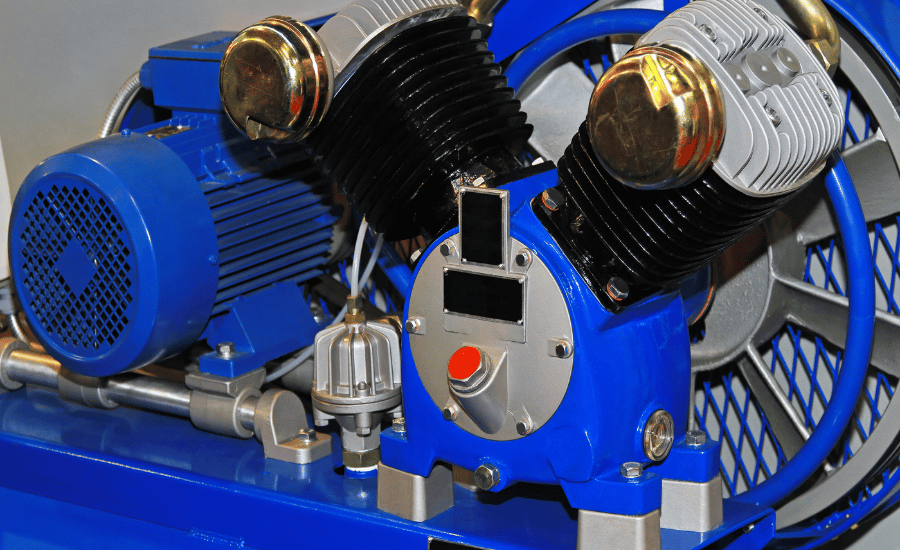
Reciprocating compressors use pistons driven by a crankshaft to compress refrigerant within cylinders. This proven design remains widely used in commercial refrigeration due to its durability, flexibility, and serviceability.
Common applications include:
- Walk-in coolers and freezers
- Food service refrigeration
- Process cooling systems with variable loads
Why they are commonly selected:
- Broad refrigerant compatibility
- Serviceable internal components
- Well suited for low to medium-capacity systems
Reciprocating compressors remain a practical choice for many commercial refrigeration applications where reliability and ease of service are priorities.
Scroll Compressors
Scroll compressors use two spiral scroll elements, one fixed and one orbiting, to compress refrigerant smoothly and continuously. Fewer moving parts contribute to stable operation and reduced vibration.
Common applications include:
- Packaged commercial refrigeration systems
- Commercial rooftop units
- Medium-capacity cooling applications
Why they are commonly selected:
- Smooth and efficient compression
- Compact footprint
- Reduced vibration and mechanical stress
Scroll compressors are widely used in commercial systems that require efficient operation and consistent performance within moderate capacity ranges.
Screw Compressors
Screw compressors use two interlocking helical rotors to compress refrigerant continuously. This design supports high refrigerant flow rates and stable output under sustained operating conditions.
Common applications include:
- Cold storage warehouses
- Food processing and distribution facilities
- Large commercial refrigeration systems
- Industrial refrigeration plants
Why they are commonly selected:
- Designed for continuous-duty operation
- Excellent capacity control under heavy load
- Long service life when properly maintained
Screw compressors are the preferred solution for large-scale commercial and industrial refrigeration systems where uptime and reliability are critical.
Other Compressor Types in Commercial Refrigeration
Some compressor designs are used in refrigeration and cooling systems but are less common in typical commercial refrigeration applications or fall outside the scope of standard remanufactured offerings.
Centrifugal Compressors
Centrifugal compressors increase refrigerant pressure using high-speed rotating impellers rather than positive displacement. These compressors are typically found in very large chiller and district cooling systems.
While efficient at full load, centrifugal compressors are generally limited to large-scale installations and are not commonly used in standard commercial refrigeration environments.
Key Factors When Selecting a Commercial Refrigeration Compressor
Cooling Capacity and Load Profile
Accurate load calculations ensure the compressor matches system demand. Systems operating continuously under high load often require different compressor designs than systems with variable demand.
Energy Efficiency and Operating Cost
Compressor efficiency influences long-term operating costs. Selecting a design that aligns with system usage patterns improves overall energy performance.
Operating Environment
Ambient conditions, operating hours, and duty cycle affect compressor selection. Commercial and industrial environments often require compressors designed for sustained operation.
Maintenance and Serviceability
Ease of servicing affects downtime and long-term cost. Compressor designs that allow inspection and component replacement support extended service life.
Matching Compressor Type to Commercial Applications
- Small to medium commercial refrigeration systems often use reciprocating or scroll compressors for balanced performance and serviceability.
- Medium-capacity commercial systems commonly rely on reciprocating compressors for efficient and stable operation.
- Large commercial and industrial refrigeration systems typically require screw compressors to manage high loads and continuous-duty operation.
Providing system details such as model number, refrigerant type, voltage, and operating conditions helps confirm the correct compressor selection.
Final Takeaways
Selecting the correct refrigeration compressor is essential for dependable commercial system performance. Capacity requirements, operating conditions, efficiency goals, and service expectations must be evaluated together.
Reciprocating, scroll, and screw compressors represent the most widely used and supported compressor designs in commercial and industrial refrigeration. Understanding how each design operates and its respective limitations helps ensure the correct solution is selected for long-term reliability and performance.
For system-specific guidance, confirming compressor compatibility ensures the replacement aligns with original equipment requirements and operating demands. Contact City Compressor if you have any questions about your compressor.