

Cost, Risk, and Lead Time Analysis for Commercial HVAC and Refrigeration
When a commercial HVAC or refrigeration compressor fails, replacement decisions are often made under pressure. Downtime is expensive. Lead times are uncertain. And terminology in the market is frequently misused.
Words like remanufactured, refurbished, and rebuilt are often treated as interchangeable, but in practice they describe very different processes, levels of verification, and risk profiles.
Understanding these differences is critical. Choosing the wrong replacement can lead to compatibility issues, shortened service life, or repeat failures that cost far more than the initial savings.

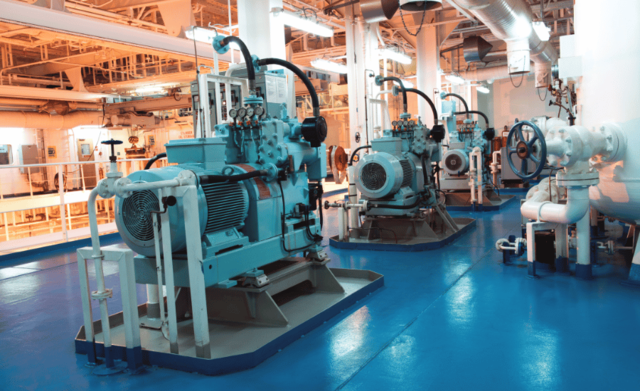
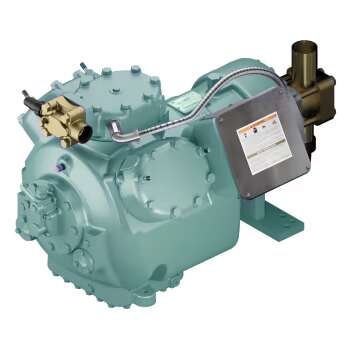
City Compressor supplies fully remanufactured compressors to OEM specifications for commercial HVAC and refrigeration systems, with model verification support to confirm compatibility before installation.
Quick Comparison Overview
| Factor | Fully Remanufactured to OEM Specifications | Rebuilt | Refurbished |
|---|---|---|---|
| Process Scope | Complete teardown, inspection, component replacement as required, pressure testing, electrical testing, and performance verification | Partial teardown and selective repair | Cosmetic or limited functional work |
| OEM Specification Alignment | Yes | Not guaranteed | No |
| Testing and Verification | Pressure-tested, leak-checked, electrically and performance tested | Varies widely | Often minimal or none |
| Typical Upfront Cost | Often lower than new, commonly cited 30% to 50% savings in commercial contexts | Lower than remanufactured but higher risk | Lowest upfront cost |
| Lead Time | Often faster than new, depending on inventory and model | Variable | Usually fast |
| Risk Profile | Lower when model and application are verified | Moderate to high | High |
| Best Fit | Urgent downtime, drop-in replacements, long OEM lead times | Budget-driven short-term fixes | Temporary or non-critical applications |
Note: Actual cost, availability, and lead time depend on compressor type, OEM platform, refrigerant, voltage, application, and market conditions.
What “Fully Remanufactured to OEM Specifications” Means
A compressor that is fully remanufactured to OEM specifications is not cosmetically refreshed and it is not selectively repaired.
This process includes:
- Complete teardown to bare components
- Detailed inspection of critical wear surfaces and components
- Replacement of components that do not meet OEM tolerances
- Reassembly to OEM specifications
- Pressure testing and leak checking
- Electrical testing
- Performance verification
The objective is to deliver a drop-in replacement that matches the original compressor’s mechanical, electrical, and application requirements.
City Compressor documents and follows this approach for the compressors it supplies, supporting commercial HVAC and refrigeration systems where compatibility and reliability matter.
What “rebuilt compressor” typically means in the field
The term rebuilt compressor is not governed by a consistent industry standard.
In most commercial contexts, rebuilt commonly means:
- Partial teardown
- Replacement of the failed component or obvious damaged parts
- Limited testing, often without full performance verification
While some rebuilds may perform adequately, others may retain worn components that shorten service life. Because scope and testing vary significantly, rebuilt compressors introduce higher uncertainty, especially in critical or continuous-duty systems.
What a “refurbished compressor” usually indicates
Refurbished is the least precise and least controlled term.
In Many cases, refurbishment involves:
- Cleaning
- Cosmetic work
- Limited functional checks
Refurbished compressors are rarely returned to OEM specifications and often lack full pressure, electrical, or performance testing. They may be appropriate only for short-term use or non-critical applications.
For mission-critical refrigeration or commercial HVAC systems, refurbishment typically carries the highest operational risk.
Cost drivers that actually matter
The real cost of a compressor replacement extends far beyond the purchase price.
Compressor acquisition cost
Fully remanufactured commercial compressors are commonly cited as costing less than new, often in the 30% to 50% savings range depending on model, size, and market conditions.
Rebuilt and refurbished options may appear cheaper upfront but often carry higher lifecycle risk.
Downtime exposure
Downtime is frequently the largest hidden cost.
If a replacement is delayed or fails prematurely, facilities may face:
- Production loss/downtime
- Temporary cooling or refrigeration rentals
- Overtime labor
- Expedited freight
- Process or tenant disruption
Industry discussions around OEM compressor availability routinely reference lead times extending from weeks into months, particularly for large or specialized units.
Installation and system cleanup
Even a true drop-in replacement still requires labor. After an electrical burnout or contamination event, additional steps are often required.
Burnout and contamination cleanup
If the failed compressor produced acids or debris, industry guidance commonly recommends:
- Proper filter drier selection
- Suction line filtration in severe cases
- Oil testing and rechecking after startup
Skipping cleanup steps can compromise any replacement compressor, regardless of whether it is new or remanufactured.
Lead time realities in commercial HVAC and refrigeration
OEM compressors are factory-built and distributed through OEM channels. Availability depends on:
- Manufacturing schedules
- Component supply chains
- Seasonal demand
- Model specificity
For many commercial and industrial compressors, lead times are not immediate. Industry commentary regularly cites weeks to months for certain models.
Fully remanufactured compressors can reduce lead time risk when inventory is available or when remanufacturing turnaround is faster than OEM production.
Where City Compressor’s supported compressor types fit best
City Compressor focuses on compressor platforms commonly used in commercial and industrial environments where speed and compatibility are critical.
Reciprocating (semi-hermetic) compressors
Widely used in commercial refrigeration and serviceable HVAC applications where precise model matching is required.
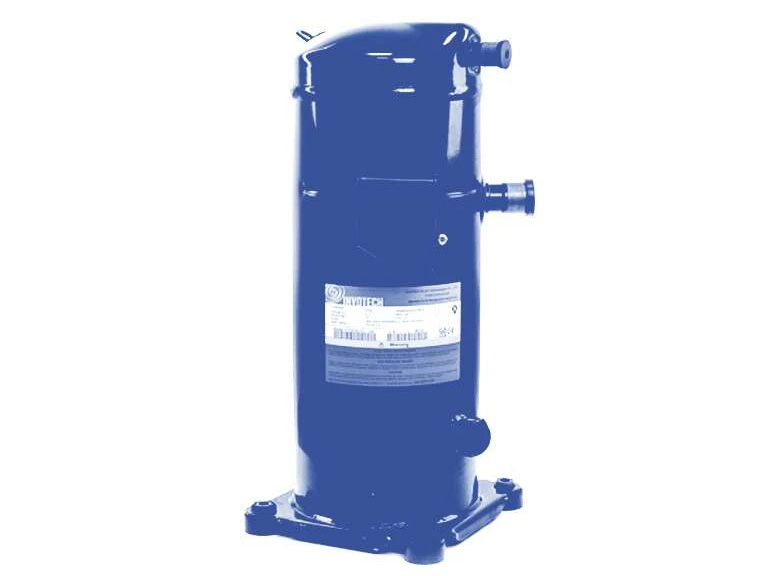
Scroll compressors
Common in packaged systems and commercial HVAC where compact footprint and efficiency are priorities.
Screw compressors
Used in higher-capacity commercial and industrial systems with continuous duty requirements.
When a fully remanufactured compressor is usually the best choice
A fully remanufactured compressor is often the strongest operational decision when:
- The system is down and time is the primary risk
- OEM lead times are extended
- A verified drop-in replacement is required
- Capital cost needs to be controlled without sacrificing compatibility
- The existing equipment platform is otherwise stable
When new systems can still make sense
New systems can be the right choice when:
- The project involves new construction or a major system redesign
- OEM program or warranty requirements mandate new equipment
- The new unit is available within the required timeline
- Broader system issues mean that replacing only the compressor is not sufficient
The verification checklist that prevents expensive mistakes
Before selecting any replacement compressor, confirm:
- Full compressor model number and suffix codes
- Refrigerant and oil type
- Voltage and phase
- Application type (HVAC, refrigeration, low temperature, medium temperature, process)
- Failure mode of the original compressor
- Required cleanup steps following burnout or contamination
Verification at this stage prevents mismatches, premature failures, and unnecessary downtime.
Video: City Compressor process overview
Get a cost and lead time answer for your exact model
If you provide your compressor model number and system details, City Compressor can confirm compatibility, application requirements, and replacement options.
Request a quote for a fully remanufactured compressor to OEM specifications and get clear answers before downtime gets expensive.